Wood Pellets for Heating: Costs and Benefits | heating.help
If you are watching heating oil and propane bills climb every winter, wood pellets look like an attractive alternative — but the numbers are not obvious at first glance. A ton of pellets costs real money up front, and the equipment, venting, and storage requirements can change the whole calculation. This guide breaks down 2026 pellet prices, BTU output, installation costs, and efficiency standards so you can decide whether pellet heating actually saves you money in your climate and your home.
What Are Wood Pellets for Heating?
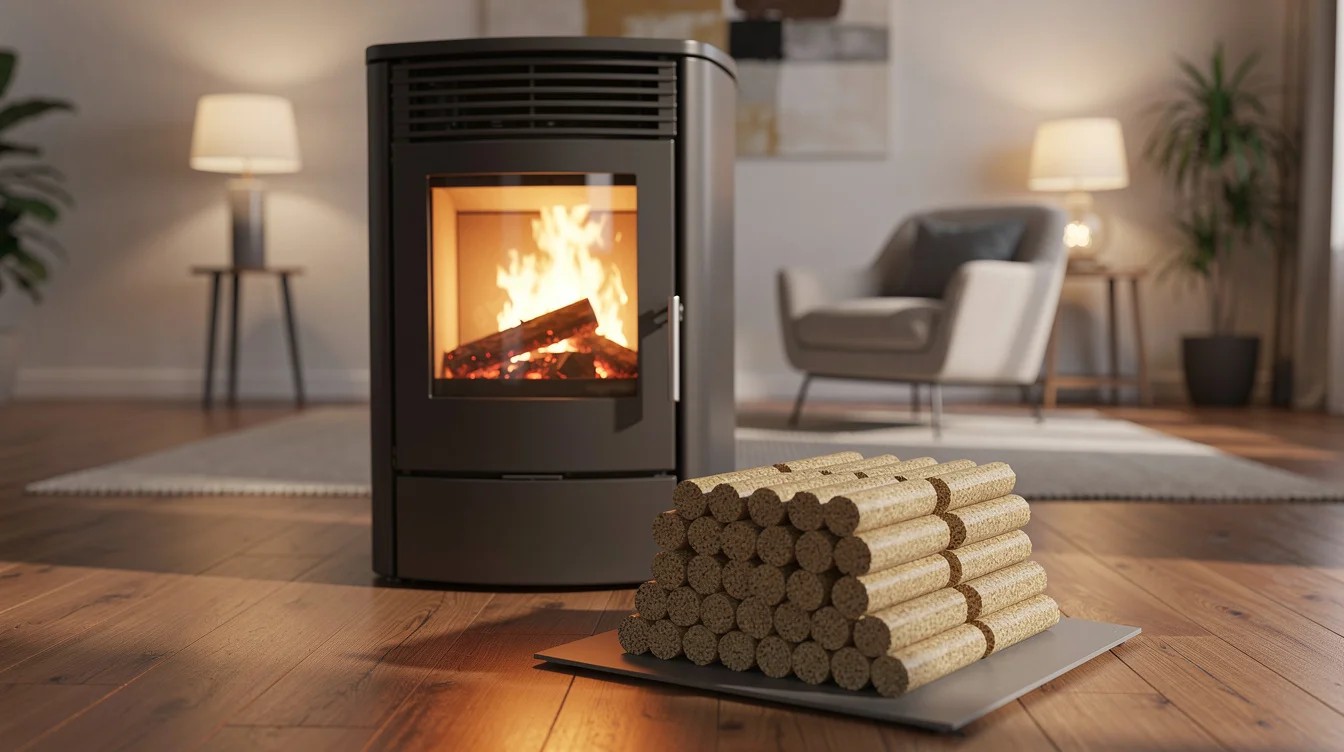
Wood pellets are small, uniform cylinders of compressed sawdust, wood shavings, and mill residue, typically about 6 to 8 mm in diameter and 10 to 20 mm long. They are a densified biomass fuel with very low moisture content — usually under 8% — which is why they burn hotter and cleaner than cordwood.
Because pellets are uniform and free-flowing, they can be fed automatically from a hopper into a burn pot, which is the single biggest advantage over a traditional wood stove: no splitting, no stacking, no reloading every 45 minutes.
How Wood Pellets Are Made
Manufacturers dry raw wood fiber to roughly 10% moisture, hammer-mill it into a fine powder, and force it through a die under high pressure. Lignin naturally present in the wood acts as the binder, so premium pellets contain no added glue or chemicals. The finished pellets are cooled, screened to remove fines, and bagged.
Pellet Grades and US Standards
The Pellet Fuels Institute (PFI) sets the grading standard most US manufacturers follow:
- Premium grade: ash content below 1%, low fines, high BTU density. Best choice for residential stoves and furnaces.
- Standard grade: ash content below 3%. Suitable for most residential appliances with more frequent ash removal.
- Utility grade: ash content up to 6%. Designed for industrial boilers and large commercial systems, not typical home stoves.
Imported pellets may also carry ENplus A1 or A2 certification, which is roughly equivalent to PFI premium. Always check the bag for a grade stamp — cheap, high-ash pellets will cost you far more in cleanup time and replacement parts than you save at checkout.
How Pellet Stoves and Pellet Furnaces Work
Pellet appliances use three moving systems: an auger that feeds pellets from the hopper to the burn pot, a combustion blower that forces air into the fire, and a convection blower that pushes heated air into the room or ductwork.
There are four common configurations for US homes:
- Freestanding pellet stove — zone heating for a single room, 30,000 to 60,000 BTU/hr output.
- Pellet stove insert — retrofitted into an existing fireplace, vented through the chimney.
- Central pellet furnace — ducted whole-home system, 50,000 to 150,000 BTU/hr, often installed as an add-on next to an existing furnace.
- Pellet boiler — hydronic system that feeds radiators or radiant floor loops, common in the Northeast.
Pellet appliances use a small-diameter pellet vent (PL vent), typically 3 or 4 inches, and can often vent horizontally straight through a side wall. A sealed outside-air intake is strongly recommended, both for efficiency and to avoid back-drafting into the home.
BTU Output: How Much Heat Do Wood Pellets Deliver?
Understanding BTU density is the key to comparing pellets against other fuels on a level playing field.
| Fuel | Energy Content | Typical AFUE / Efficiency |
|---|---|---|
| Wood pellets | ~8,000 BTU per lb; 16–16.5 million BTU per ton | 70–85% |
| Heating oil | 138,500 BTU per gallon | 80–85% |
| Propane | 91,500 BTU per gallon | 90–95% |
| Natural gas | ~1,030,000 BTU per 1,000 cu ft (MCF) | 90–97% |
| Electricity (resistance) | 3,412 BTU per kWh | 100% |
| Air-source heat pump | 3,412 BTU per kWh | 200–350% (COP 2.0–3.5) |
A single 40-pound bag delivers about 320,000 BTUs of input energy. At 80% efficiency, that is roughly 256,000 BTUs of usable heat — enough to carry an average 2,000-square-foot home through a mild winter day in a moderate climate.
Wood Pellets for Heating: Cost Breakdown (2026)
Pellet Prices per Ton
- Bulk delivery (whole pallet or blown-in): $280–$380 per ton
- Bagged retail (40-lb bags): $5.50–$7.50 per bag, or $275–$375 per ton equivalent
- Premium softwood brands: $340–$420 per ton in high-demand markets
- Utility grade: $200–$260 per ton, with higher ash and more frequent cleanup
Pellet prices spike in cold snaps and in regions far from mills. In the Northeast and Pacific Northwest, where pellet manufacturing is concentrated, expect the low end of these ranges. In the Mountain West and Deep South, expect the high end plus delivery surcharges.
Equipment and Installation Costs
| System | Equipment Cost | Installed Cost |
|---|---|---|
| Freestanding pellet stove | $1,200–$3,500 | $2,500–$6,000 |
| Pellet stove insert | $2,000–$4,500 | $3,500–$7,000 |
| Central pellet furnace | $3,500–$8,000 | $6,000–$12,000 |
| Pellet boiler | $8,000–$15,000 | $12,000–$25,000 |
Installed costs include venting, hearth pad or clearances, permits, and labor. If you are comparing this against a conventional system replacement, our full furnace installation cost breakdown covers gas, oil, and electric equipment side by side.
Annual Operating Costs
Take a home that needs 60 million BTUs of delivered heat per winter:
- Pellet furnace at 80% efficiency: 75 million BTU input ÷ 16.5 million BTU per ton = 4.5 tons
- At $330 per ton: about $1,485 per year in fuel
A pellet stove used as a zone heater — say three tons per season — runs roughly $990 per year and can shave 20–40% off a central heating bill by letting you dial back the main furnace.
Cost per Million BTU: Pellets vs. Oil, Propane, Gas, and Electric
This is the comparison that actually matters. Figures below assume typical 2026 US retail fuel prices and mid-range equipment efficiency.
| Fuel | Cost per Million BTU Delivered |
|---|---|
| Natural gas | ~$12 |
| Air-source heat pump (COP 2.5) | ~$20 |
| Wood pellets (80% efficient) | ~$24 |
| Propane (92% efficient) | ~$31 |
| Heating oil (85% efficient) | ~$33 |
| Electric resistance (baseboard) | ~$50 |
Pellets are consistently cheaper than oil and propane and more expensive than natural gas and modern heat pumps in most markets. The savings case is strongest if you currently heat with oil, propane, or electric resistance — and weakest if you have access to inexpensive natural gas.
Benefits of Heating with Wood Pellets
- Lower fuel cost than oil or propane in most US regions, with less price volatility than petroleum fuels.
- Automatic operation — load the hopper once a day instead of tending a fire every hour.
- Low moisture and high consistency mean cleaner, more predictable combustion than cordwood.
- Renewable, low-carbon fuel — pellets are made from mill residues and low-grade timber; the carbon released is part of the short-term biogenic cycle.
- Works as a hedge — a pellet add-on furnace lets you keep your existing system as backup and switch fuels based on price.
- EPA-certified emissions — modern pellet appliances are among the cleanest solid-fuel options available.
Drawbacks and Practical Considerations
- Storage is a real constraint. One ton of pellets occupies roughly 50 cubic feet. A full season’s supply of four to six tons needs a dry, ventilated space roughly the size of a small garage bay.
- Pellets must stay bone dry. Moisture causes pellets to crumble into fines, which jam augers and cause burn-pot clinkers.
- Manual labor remains. You still carry 40-pound bags and haul ash — roughly one bucket per week for a stove, more for a furnace.
- Electricity dependency. Pellet appliances need power for the auger and blowers; a multi-day outage requires a generator or battery backup.
- Not a heat pump substitute. Pellet systems do not qualify for many of the heat pump rebates available under current federal and utility programs.
- Insurance and permitting. Inform your homeowner’s insurer and confirm local code requirements before installation.
Wood Pellets vs. Heating Oil and Other Fuels
If you are currently on oil, this is the most common upgrade path. A pellet furnace typically cuts seasonal fuel spending by 20–35% compared with oil at $3.90–$4.30 per gallon, and it removes exposure to delivery minimums and mid-winter price spikes. That said, oil systems require far less physical labor and no fuel storage footprint. Our oil furnace efficiency and replacement guide walks through AFUE ratings, burner maintenance, and when it makes sense to convert versus repair.
Against propane, pellets usually win on cost per BTU but lose on convenience. Against natural gas, pellets almost never win on cost. Against a modern cold-climate heat pump, the numbers are close, and the heat pump requires no fuel deliveries at all.
Efficiency, Safety, and Maintenance Standards
Pellet appliances sold in the US should carry:
- EPA 2020 New Source Performance Standards certification — pellet stoves must emit no more than 2.0 grams per hour of particulate matter. Note that ENERGY STAR does not currently certify pellet stoves, so the EPA emissions rating and the manufacturer’s HHV efficiency figure are the benchmarks to compare.
- UL 1482 listing for solid-fuel room heaters, or UL 391 for solid-fuel central furnaces.
- ASTM E1509 compliance for pellet stove performance and safety.
- NFPA 211 compliant venting and clearance-to-combustible installation.
Maintenance schedule for a typical residential pellet appliance:
- Daily: scrape the burn pot, check the hopper.
- Weekly: empty the ash pan, clean the glass and heat exchanger.
- Monthly: vacuum fly ash from the venting and blower cavity.
- Annually: professional vent and chimney cleaning, $150–$300, plus a gasket and blower inspection.
Install carbon monoxide detectors on every level of the home and keep a dry-chemical ABC extinguisher within reach of the appliance. Keep all combustibles outside the listed clearance zone.
Is Pellet Heating Right for Your Home?
Pellet heating pencils out best when you meet most of these conditions:
- You heat with oil, propane, or electric resistance rather than natural gas.
- You have dry, ground-level storage for three or more tons of pellets.
- You are comfortable with weekly ash handling and heavy lifting.
- You live in a cold climate with a long heating season that amortizes the equipment cost.
- You want a fuel-diversified backup rather than a single-source system.
It pencils out poorly if you have cheap natural gas, no storage space, physical limitations that make bag handling difficult, or a home where ductwork cannot support a central pellet unit. Before committing, review the broader furnace system and buying guide to understand how a pellet unit fits alongside forced-air equipment, and get at least three written quotes from licensed contractors.
Frequently Asked Questions
How much do wood pellets for heating cost per ton in 2026?
Bulk wood pellets typically run $280 to $380 per ton delivered, while bagged pellets sold at retail average $5.50 to $7.50 per 40-pound bag — roughly $275 to $375 per ton equivalent. Premium softwood pellets sit at the top of that range; utility-grade pellets cost less but produce significantly more ash and require more frequent cleaning.
How many BTUs are in a ton of wood pellets?
One pound of quality wood pellets contains about 8,000 BTUs, so a 2,000-pound ton holds roughly 16 to 16.5 million BTUs. A single 40-pound bag delivers about 320,000 BTUs of input energy, which is enough to run a mid-size pellet stove at full output for five to eight hours.
Can a pellet furnace replace my existing furnace?
Yes, in many cases. A central pellet furnace can be tied into existing ductwork as a primary heat source or installed as an add-on that works alongside a gas, oil, or electric furnace. You will need dedicated PL venting, a dry storage area for three to six tons of pellets, and confirmation from a licensed contractor that your duct static pressure and blower capacity can handle the new unit.
Conclusion
Wood pellets for heating are a genuinely competitive fuel choice in 2026 — roughly $24 per million BTUs delivered, cheaper than heating oil and propane, and backed by a mature US manufacturing base and clear PFI grading standards. Expect to pay $2,500 to $12,000 installed depending on whether you choose a single-room stove or a ducted central furnace, and budget $1,000 to $1,800 per heating season in pellets. The trade-offs are real: storage, ash, bag handling, and a dependence on electricity for the auger and blowers. But for homeowners in cold climates currently burning oil or propane, a pellet stove or add-on pellet furnace can cut annual heating costs meaningfully while keeping the existing system as backup. Get written quotes from at least three licensed, insured contractors, confirm clearances and venting to NFPA 211, and verify locally available pellet supply before you buy.
Ready to compare pellet heating quotes in your area? Request free estimates from NATE-certified HVAC contractors near you and find out exactly what a pellet stove or central pellet furnace would cost for your home — no obligation, no pressure.