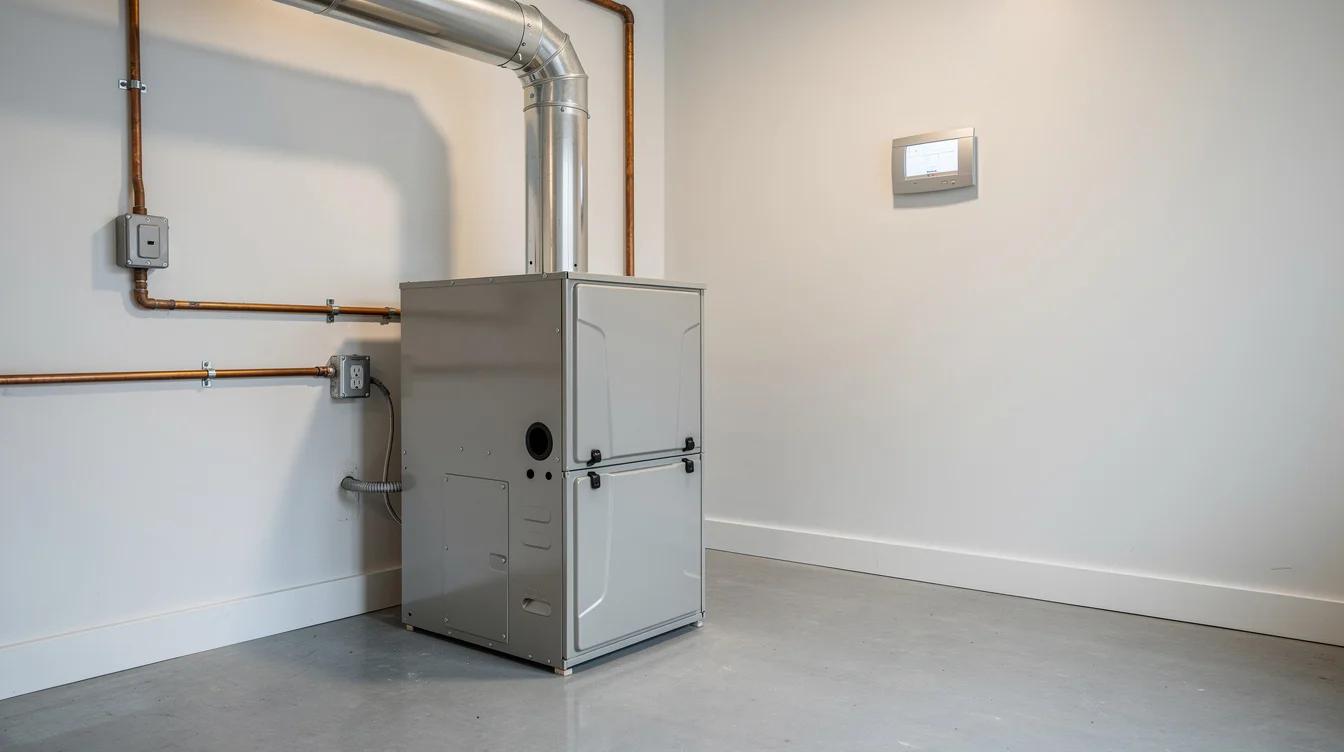
High Efficiency Oil Furnaces: Are They Worth It?
If your oil furnace is 20 years old and your fuel bills keep climbing, you are probably weighing a $6,000 to $9,000 replacement against another season of $2,500 fill-ups. A high efficiency oil furnace can cut fuel consumption by 15% to 25% — but the payback math depends on your current AFUE, your local oil price, and whether your chimney can handle the upgrade. Here is the straight answer, with real numbers.
What Makes an Oil Furnace “High Efficiency”?
Efficiency in an oil furnace is measured by AFUE (Annual Fuel Utilization Efficiency) — the percentage of energy in the fuel that becomes usable heat instead of going up the flue. A 90% AFUE furnace converts 90 cents of every fuel dollar into heat; the rest escapes as exhaust.
AFUE Benchmarks for Oil Furnaces
| AFUE Range | Classification | Notes |
|---|---|---|
| 65% – 78% | Legacy / aging | Typical of furnaces installed before 2000 |
| 80% – 84% | Standard | Older federal minimum territory |
| 85% – 86% | High efficiency (non-condensing) | ENERGY STAR eligible |
| 90% – 95% | Premium condensing | Maximum efficiency, special venting |
To carry the ENERGY STAR label, an oil-fired furnace must achieve at least 85% AFUE. The federal minimum efficiency standard for most new non-weatherized residential oil furnaces is 83% AFUE, so an 85% unit clears the legal floor but only modestly.
Non-Condensing vs. Condensing Oil Furnaces
Non-condensing (85%–86% AFUE) units are the workhorses of the oil market. They use a conventional heat exchanger, vent into a chimney or a lined flue, and cost meaningfully less. They are the right choice in most homes that already have a sound masonry chimney.
Condensing (90%–95% AFUE) units extract additional heat by cooling flue gases below the dew point, capturing latent heat. The trade-offs are real:
- Venting: Condensate is acidic, so you need an AL29-4C stainless steel liner or a listed special vent system — rarely PVC, unlike gas condensing furnaces.
- Cost: $2,000 to $4,000 more than a comparable non-condensing unit, plus liner work.
- Complexity: A condensate drain and neutralizer must be routed and maintained.
If you are still learning how these systems work, our overview of the oil furnace explains firing rates, nozzles, and heat exchanger designs in plain English.
High Efficiency Oil Furnace Prices in 2026
Real-world installed pricing for U.S. homeowners, including equipment, labor, and disposal:
| Item | Typical Installed Cost (USD) |
|---|---|
| 85%–86% AFUE oil furnace, 80,000–100,000 BTU/h | $4,500 – $7,500 |
| 90%–95% AFUE condensing oil furnace | $6,500 – $11,000 |
| AL29-4C stainless chimney liner | $1,200 – $2,500 |
| New 275-gallon above-ground oil tank | $1,500 – $3,000 |
| Old equipment removal and disposal | $300 – $600 |
| Duct sealing or modification | $400 – $1,500 |
| Annual tune-up and nozzle/filter service | $150 – $300 |
For a fuller breakdown by region and system type — including oil boilers and hybrid setups — see our guide to furnace installation costs.
Most residential oil furnaces are sized between 80,000 and 120,000 BTU/h output, firing roughly 0.75 to 1.25 gallons per hour of No. 2 heating oil. A properly sized unit matters: oversizing shortens heat exchanger life and wastes fuel, so insist on a Manual J load calculation rather than a rule-of-thumb guess.
Are High Efficiency Oil Furnaces Worth It? The Payback Math
Example: Upgrading From a 70% AFUE Furnace
Say your home burns 600 gallons of No. 2 heating oil per year (a common figure for a 2,000 sq ft home in the Northeast) and oil costs $4.20 per gallon — a $2,520 annual fuel bill.
- At 70% AFUE, useful delivered heat = 600 × 0.70 = 420 gallons’ worth.
- To deliver that same heat at 90% AFUE: 420 ÷ 0.90 = 467 gallons.
- Fuel saved: 133 gallons per year, or about $559.
If the condensing premium over a non-condensing unit is roughly $3,000, simple payback lands around five to six years — and better if oil prices rise. Replacing a 78% furnace with a 90% model saves less (roughly $280/year), stretching payback past a decade.
When the Upgrade Clearly Makes Sense
- Your furnace is 15+ years old and repairs are approaching half the cost of replacement.
- You are facing a failed heat exchanger, cracked combustion chamber, or repeated nozzle and electrode failures.
- Your chimney is unlined or deteriorating — the liner cost is coming either way.
- You plan to stay in the home five years or more.
- You want lower emissions and quieter operation with an ECM or variable-speed blower.
When It Does Not
- Your existing furnace already tests at 82%–85% AFUE — gains will be marginal.
- You are a candidate for a cold-climate heat pump or a dual-fuel setup. In much of the Northeast, a heat pump paired with a propane or oil backup can beat oil on operating cost, especially with utility rebates. If you are in this position, track heating oil prices seasonally before committing to another 20 years of oil.
- Your ducts are leaky and unsealed — fix the envelope first; a 10% duct loss can erase the efficiency gain.
Installation Requirements Most Homeowners Miss
Venting is the number one surprise. A condensing oil furnace produces acidic condensate and low-temperature flue gas. Masonry chimneys that worked fine with a 70% furnace will corrode; budget for a stainless liner or a sealed special vent.
Tank condition and placement. A 275-gallon tank holds roughly 250 usable gallons. If your tank is 25+ years old, buried, or showing weeping seams, plan for replacement. Modern tanks include containment and overfill protection.
Combustion air. High efficiency units need adequate combustion air and, in tight homes, a dedicated intake. Do not let an installer ignore this — it affects safety and burner performance.
Biodiesel compatibility. Most current burners are approved for B5 blends, with many rated for B20. Confirm on the rating plate. Higher blends may require different seals and nozzle sizing, and your oil dealer must supply consistent fuel quality.
Permits and inspection. Oil-fired installations typically require a mechanical permit, a combustion safety test, and in many jurisdictions a chimney or vent inspection.
Maintenance, Lifespan, and Realistic Expectations
A well-maintained high efficiency oil furnace lasts 15 to 20 years in most U.S. homes. To get there:
- Schedule an annual tune-up — combustion analysis, nozzle replacement, filter change, and heat exchanger inspection. This alone preserves 3%–5% of efficiency.
- Replace the oil filter at least annually and the nozzle every 1–2 years, or per the manufacturer’s spec.
- Keep the condensate trap and neutralizer clear on condensing models.
- Change the air filter every 1–3 months during heating season.
- Have the chimney or vent inspected annually; oil sooting is a real fire and CO risk.
Rebates and Incentives
Incentives for oil equipment are thinner than for heat pumps. The federal Energy Efficient Home Improvement Credit (25C) requires furnaces to meet 97% AFUE, a bar no production oil furnace clears — so most oil furnaces do not qualify. State programs vary widely:
- Northeast states (Maine, Massachusetts, New York, Connecticut, Vermont) often fund heat pump conversions and efficiency audits rather than oil furnace rebates.
- Utility rebates may cover ECM blowers, smart thermostats, or tune-ups.
- Some manufacturers and oil dealers offer financing or seasonal promotions worth $200 to $800.
Always verify current terms with your state energy office before you sign a contract, and keep your receipt and AHRI certificate.
Frequently Asked Questions
What AFUE rating counts as a high efficiency oil furnace?
In the U.S. market, any oil-fired furnace rated 85% AFUE or higher is considered high efficiency, and that is the threshold required to earn the ENERGY STAR label. Premium condensing oil furnaces reach 90% to 95% AFUE, while the federal minimum for most new residential oil furnaces is 83% AFUE.
How much does a high efficiency oil furnace cost installed?
Most homeowners pay $4,500 to $7,500 for an 85% to 86% AFUE non-condensing oil furnace installed, or $6,500 to $11,000 for a 90% to 95% AFUE condensing unit. Add $1,200 to $2,500 if a stainless steel chimney liner is required and $1,500 to $3,000 for a new oil tank.
Can a high efficiency oil furnace use biodiesel?
Yes. Most modern oil furnaces and burners are rated for B5 (5% biodiesel) blends, and many manufacturers now approve B20. Check your specific model’s rating plate and owner’s manual before switching blends, because higher bio content can affect seals, filters, and nozzle sizing.
Bottom Line: Is a High Efficiency Oil Furnace the Right Call?
A high efficiency oil furnace is worth it when you are replacing a furnace in the 65%–78% AFUE range, you plan to stay in your home for at least five years, and your chimney needs work anyway. Expect to spend $4,500 to $7,500 for an 85% unit or $6,500 to $11,000 for a 90%+ condensing model, and to recover much of the premium through 15%–25% lower fuel consumption. It is not worth it if your existing furnace already tests near 85%, if your ducts are leaking badly, or if generous heat pump incentives in your state would deliver a lower total cost of ownership. Get two or three written quotes that include a Manual J load calculation, a venting assessment, and combustion-test results — then decide with numbers instead of guesswork.
Ready to replace your oil furnace? Start by getting a free load calculation and two competing quotes from licensed, NATE-certified contractors in your area — and ask each one specifically whether your chimney needs a liner before you sign.